
Impression (Etymology)
The word originates from the Late Middle English impressioun (late 14th century), which meant a “mark produced by pressure” or an “image produced in the mind”. It is derived from the Latin impressionem, meaning “a pressing into”.
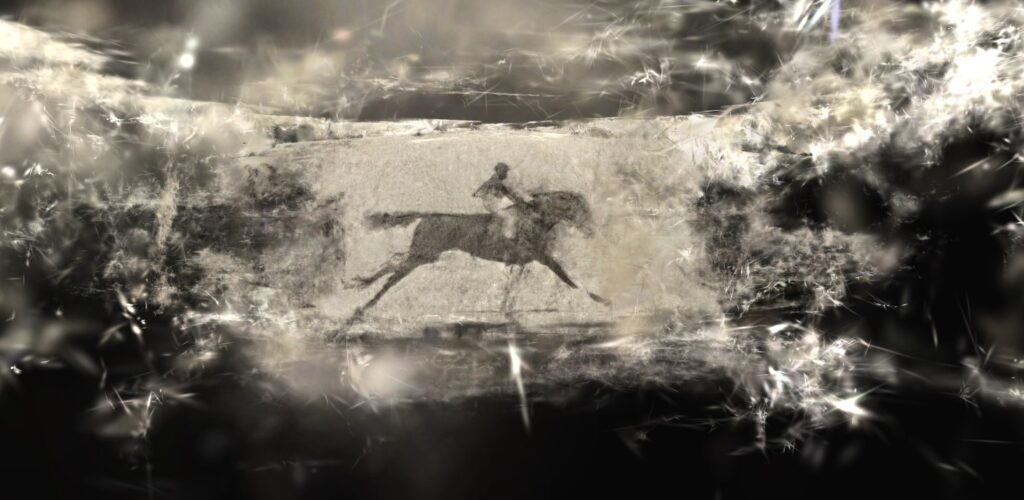
project page: stereograf.com/portfolio/impressions-of-motion/
A different use of 3DGS
This is my first work published following an exploration of the use of 3D Gaussian Splatting software for other purposes than reality reconstruction.
The best (and shortest) explanation I can find for those interested would be the following:
And that’s all great… but what if I want to do something else with this?
If the best analogy for why this tech works is that, just like paintings, it forms an illusion from lots of small “brushstrokes”, then why can’t we paint something that doesn’t actually exist?
The process
I think about “growing sculptures” during the creation of these pieces:
I can only influence the training so much, by setting the conditions, I can specify the context in which the point cloud grows and adapts to its set environment, but the actual growth itself, the “drawing” and adjustment of each streak is simply the gaussian splat training process occurring by itself.
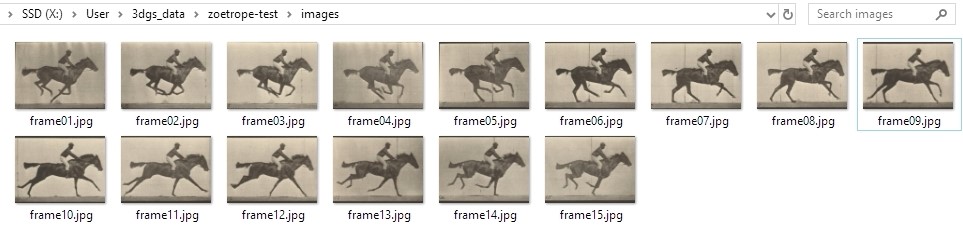
Here are more details on the process:
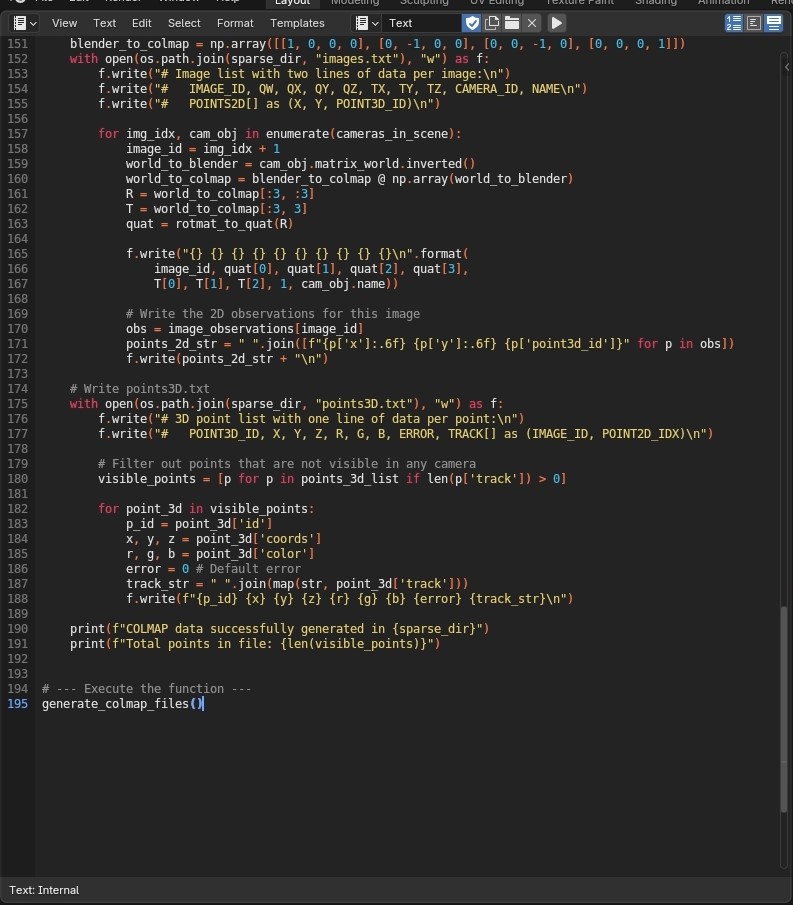
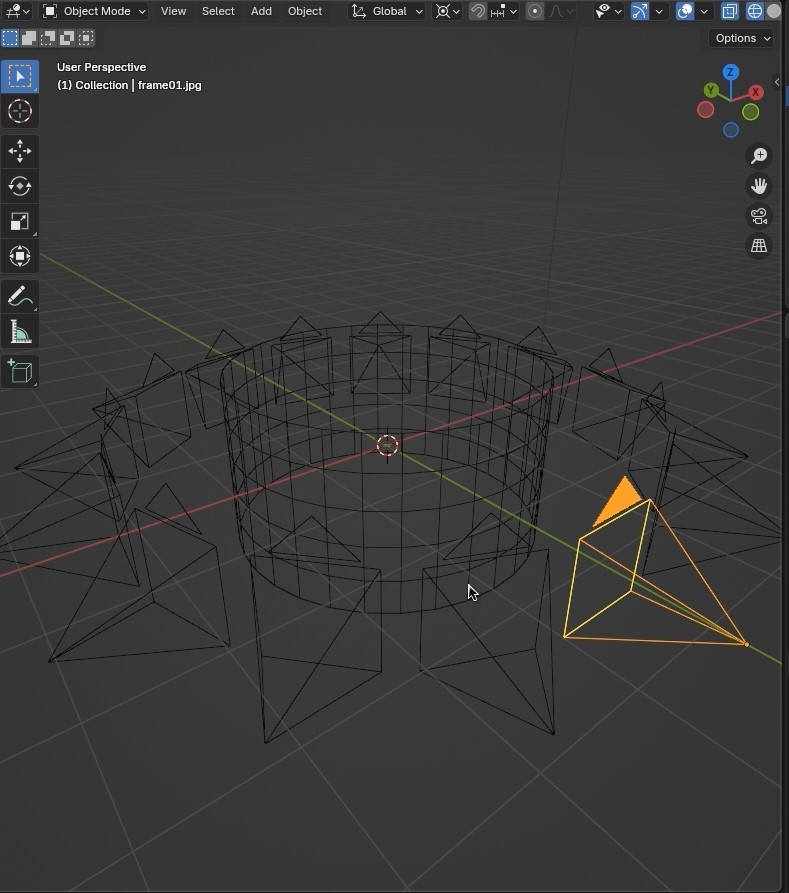
above are screenshots of the Blender setup that produces the data that “fools” the 3D Gaussian Splatting training software into thinking that these images were captured from different points of view (each of the camera positions in the image on the right)
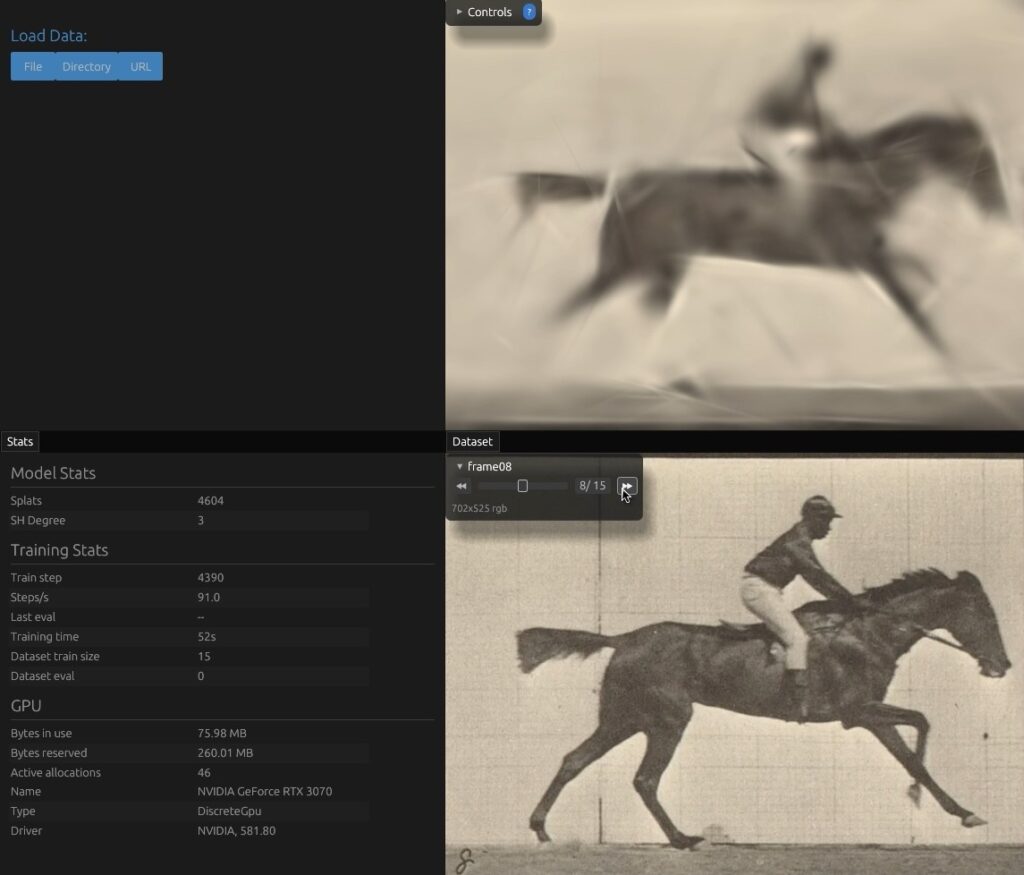
The idea was to capture motion inside a single static Gaussian Splat scene, hence the idea of a zoetrope-cylindrical format (for a repeating loop).
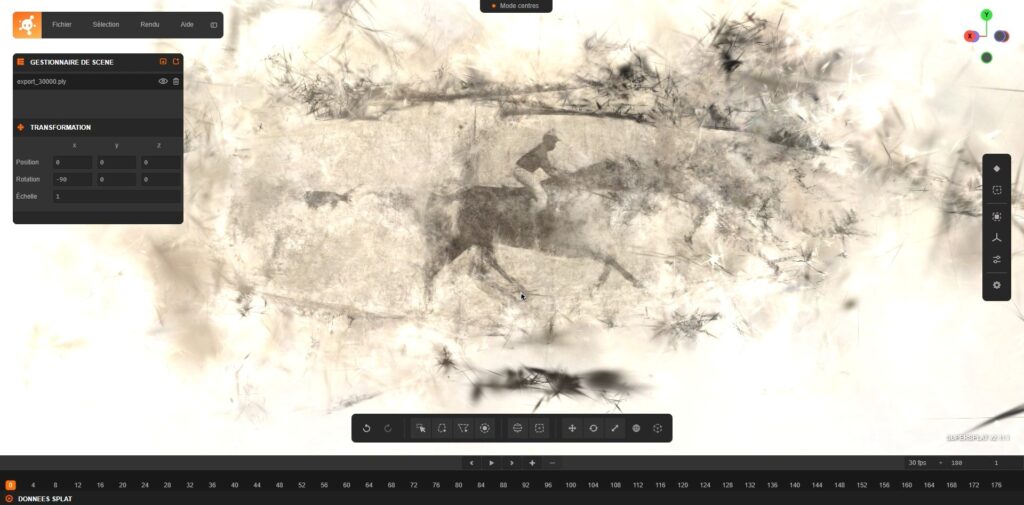
Inspired by lenticular art, anamorphia in art installations, technically allowed by modern radiance field research, and conceptually based on Alex Carlier’s Gaussian Painters github project.

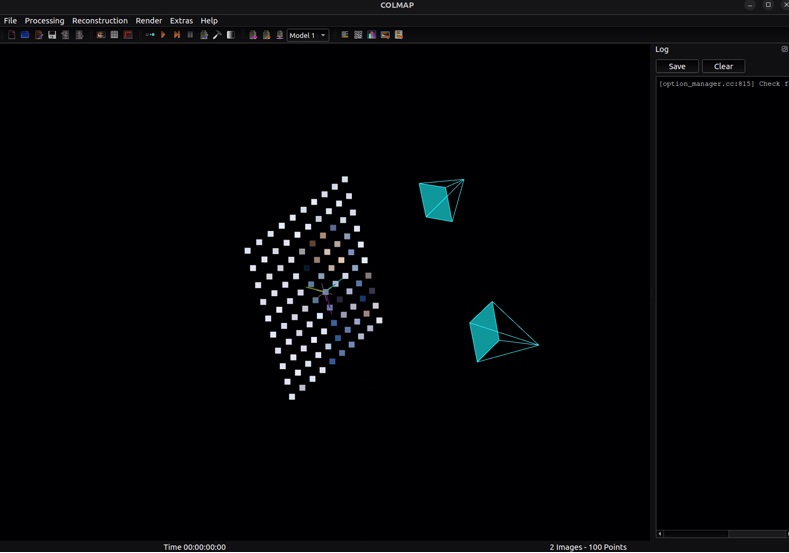
project page: stereograf.com/portfolio/impressions-of-motion/