
Though we still live in a world in which oil, gold remain the commodities most sought after, there is another resource that has come into play more recently. One that is not extracted from the Earth, and yet might cause as much harm to us as environmental degradation. It’s our focus.
The platforms we interact with daily are vast infrastructures designed in a very specific manner by some of the wealthiest corporations in history. And as you probably know, their entire business model relies on
your time,
and your data.
I simply want to point out how fact means that resistance to the attention economy is actually in the hands of each individual: we resist with each instant that we withhold from spending on social media, or that we do not spend on our phones altogether.
While helping our own mental health this way we are also actively giving less of our time, attention, data (which are not just valuable, but crucial, to actors of the attention economy) and are stopping the attention market from growing and their players from becoming more powerful.
A simple act like that is fundamentally radical and potentially paradigm-shifting if the awareness of this power within our hands was acknowledged publicly.
Starving the Machine to Reclaim Our Lives
We often call this the “attention economy,” but as it was beautifully put in the video below, that term is really a euphemism: when a platform hijacks your attention, it isn’t taking an isolated fragment of your mind to leave the rest of you intact… it is taking your time.
It is a life economy. And every minute they extract from us is a minute we never get back.
But there is a glaring vulnerability in their system, one that sits right in the palm of your hand. They cannot harvest what you do not give them.
The Boycott in Your Pocket
We know that stepping away from social media lowers anxiety and improves our mental health.
But what if instead of talking about reducing screen time entirely as self-care, we recognized that this act was also a profound economic defiance?
By reclaiming your attention, you aren’t just healing your mind and reclaiming your time, you are actively powering off the machinery that profits off your manufactured misery.
The tech industry’s massive algorithmic infrastructure fundamentally relies on us feeling powerless, disconnected, and pacified by infinite feeds. When we surrender our focus, we surrender our agency.
Every minute you spend looking at the sky instead of a feed, building something with your hands, or simply being present in a room, is simultaneously enriching your life and starving the algorithm of its lifeblood.
A Paradigm of Radical Resistance
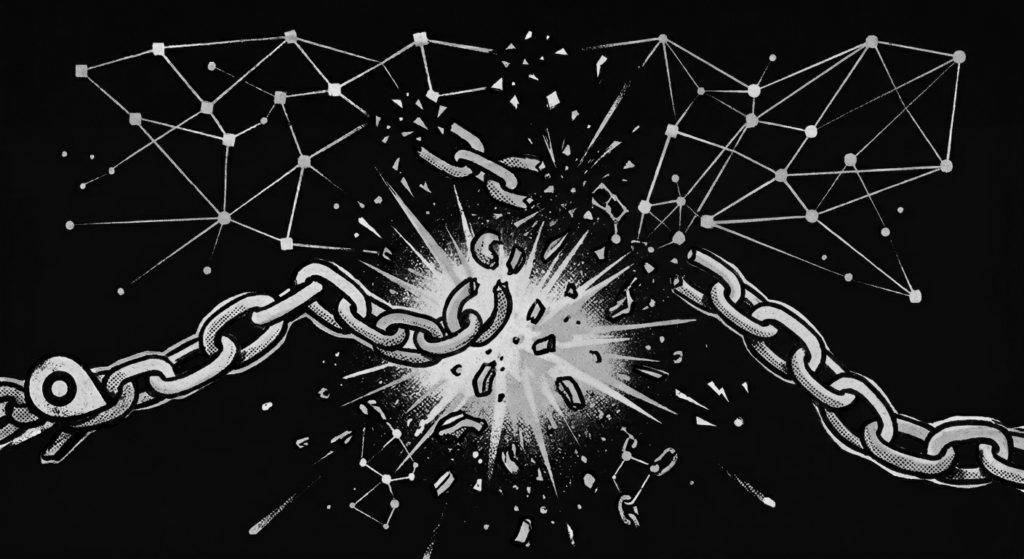
Think of radical resistance. It likely seems at first a loud, messy, and violent thing (protests, boycotts, and picket lines…), but in the digital age, resistance can be as simple as rejecting the status quo norm of relying on social media for human interaction, and I think that is fundamentally punk.
We don’t even need such a big organized movement to disrupt these systems. The power is already decentralized: it is distributed directly into the hands of billions of individuals. If we shifted the cultural narrative from a guilty “I need to look at my phone less” to a defiant “I am choosing to withhold my life from companies that exploit it,” the paradigm could simply shift.
The tools we use are not neutral. They are designed to keep us as audience members rather than active participants in our own lives. Choosing authorship over pre-chewed ideas, and creativity over endless consumption. That is the ultimate subversion of power.
Sand in the Gears: Sabotaging the Extraction
Withholding our time is the most potent weapon we have, but our resistance doesn’t have to stop when we are looking at a screen. We can disrupt the system with micro-acts of digital defiance: denying app tracking permissions, taking the extra three seconds to hit “Reject All” on a cookie banner, scrubbing obnoxiously long tracking identifiers from the ends of URLs before sharing a link with a friend…
In isolation, these actions seem minuscule. But at scale, this friction would theoretically be devastating to a model built on frictionless surveillance. Every time we refuse to be seamlessly categorized and quantified, we throw sand into the gears of the machine.
The Revolution is Offline
Not giving into a machine built by behavioral psychologists to be as addictive as a slot machine isn’t going to be easy. But we can start by acknowledging that we hold the power to resist.
Realize the absolute, undeniable value of your own focus.
And so, the next time you feel the phantom urge to reach for your phone to fill a silent moment, remember what you are holding back.
Your attention is your life.
Guard it fiercely.